Few minutes on a job site are a lot more sobering than seeing a wintertime sunlight melt simply enough snow to transform a slate roof right into a moving sheet of ice. The avalanche roars off the eaves, tears the copper half round like a zipper, folds a custom-made leader box like paper, and buries a pathway in a knee-deep drift. The house survives, yet the details that make it gorgeous pay the price. Shielding heritage roofings from that type of damage demands more than a directory format. It requests level of sensitivity to old structures, fluency with materials, and a willingness to adjust the geometry of snow guards to each building's story.
This is where customized thinking shows its value. Not only for the guards themselves, but also for how they communicate with whatever that gives a historic roof its language: dormers, cupolas, finials, smokeshaft shrouds, and the precious jewelry of copperwork that frameworks the eaves and valleys. The objective is to tame the lots without aesthetically scarring the make-up. Done right, a snow guard strategy really feels inevitable, as if the initial architect had actually called it out on the vellum.
The stakes on heritage roofs
Snow loads are not theoretical. On a steep 12:12 roof, a modest 6-inch snowfall filled by a thaw can approach 12 to 18 pounds per square foot. When it launches in a single sheet, the pressure focuses at the eaves, valleys, and around penetrations. That is where damages and risk live. Old slate fractures at the strike holes, clay ceramic tile shatters, and cedar shakes get levered out by hooks and braces never designed for that sort of shock. The human threat is worse: a slide timed with a door opening or a solution call at an attic dormer places people directly beneath an uncertain hazard.
Older buildings include their own problems. Framework can be variable, sheathing may be open or skip-laid, and information shift and clear up over a century. No stock pattern fits every one of that. If you acquire a roofing system that uses personalized dormers, a hand-formed ridge, and a line of personalized cupolas, you owe it a layout that speaks the very same language. Business like Salvo Metal Works have actually made a particular niche here, making Customized Snow Guards and the buddy elements that tie the system together without stepping on a building's character.
How snow actually moves on the roof
Before placing a solitary guard, picture the snowpack as a slow-moving fluid. Roof pitch, surface area rubbing, solar gain, and heat loss from the structure establish exactly how that fluid behaves.
On slate and standing seam metal, the surface area is slick, so snow tends to move in pieces. Cedar and textured clay floor tile add rubbing, holding snow longer and shedding it in smaller launches. Pitch accelerates everything. An 8:12 roofing system frequently holds, a 12:12 roof typically disposes. Orientation issues too. South deals with cycle with thaw and refreeze, developing ice lenses that lube the pack. North faces hold chilly, typically requiring less guards however requiring interest in late wintertime when loads accumulate.
Architectural functions act like rocks in a stream. Smokeshafts, cupolas, customized roofing vents, skylight wells, and dormers disrupt flow, produce swirls, and concentrate lots at their shoulders. Eaves above a veranda, a solarium, or a line of French doors request added caution. Valleys collect snow from two planes, after that concentrate it right into a narrow network. An excellent layout accepts this hydrology and responses with geometry instead of guesswork.
The situation for custom-made components
Most efforts to insert a stock snow guard pattern onto a historical roof end with either a clumsy appearance or jeopardized performance. Custom-made work fixes two troubles. Initially, it enables the guard to match the roofing system's visual: patinated copper on a 1920s slate, hand-finished bronze on a Beaux-Arts villa, repainted steel that vanishes on a dark standing seam. Second, it allows the installing approach to value the roofing system, not battle it.
On standing seam metal, for example, typical screw-down snow guards welcome leakages and galvanic problem. A customized mechanical joint clamp, evaluated for slip resistance and profiled to the actual seam geometry on that roof, stays clear of infiltrations. On slate, appropriately bedded hooks that bear on the slate, not with it, will not create point lots that invite fracturing. On breakable clay, a continual bar system sustained at the rafters may defeat an area of specific pads. These are not theoretical distinctions, they are the distinction in between a roof that weathers a years of winters months with self-respect and one that stops working silently underneath the snow.
Aesthetically, the palette needs to match the rest of the metalwork. If the eaves wear copper seamless gutters, if the cupola skirts and customized chimney shrouds are developed from the same sheet, there is no reason for the snow guards to scream in light weight aluminum. Salvo Metal Works and comparable shops will certainly patinate copper or type stainless with a bronze PVD finish to rest comfortably with custom finials and leader boxes. Information comes to be a discussion throughout the roof covering, not a collection of dissimilar notes.
Reading the structure before you draw the layout
Any experienced snow guard plan starts on a ladder, not behind a workdesk. I walk the eaves, flashlight in hand, and look for evidence of previous slides. Torn seamless gutter spikes, altered snow guards, and scalloped snow lines inscribed in a spring thaw will inform you where the roofing system gave way. I note whether the sheathing is plank or plywood and exactly how much the rafters are spaced. When I can, I map rafters with a rare-earth magnet and painter's tape to give placing lines that respect structure.
Inside, I check for heat loss at the eaves and along valleys. Infrared imaging on a chilly early morning makes the unnoticeable noticeable. Warm touches telegraph conductive paths that accelerate melt and cause releases. Those areas are not where you wish to save money on guard density.
Finally, I take a look at the life of the house below the roof covering. Where do people enter? Where do shipments occur in winter season? Exists a terrace under a low eave? These human lines commonly matter more than an academic tons. The only effective layout is one that shields the locations individuals and snow will meet.
Patterns that hold
There are a handful of snow guard strategies that I return to since they work. None of them are global, yet each has actually earned its place.
For broad, uninterrupted planes like a 40-foot run of 10:12 slate, I favor a multi-row pattern, generally three to five training courses up from the eave for the first row, after that staggered rows at 24 to 36 inches on center up and down, with straight spacing readjusted by pitch and exposure. On hostile pitches above 10:12, rows move closer, often to 18 inches, and the field density boosts. On north encounters, I typically open up the spacing a little due to the fact that the pack sits tight longer.
Above additional projections like a patio or bay window, I tighten up the rows, sometimes adding a continuous bar system 2 programs above the eave. The factor is to capture a relocating sheet early, not to fight it at the lip. On standing joint, I commonly bracket a bar to the seams with clamps so the lots disperses cleanly without penetrations. On slate and tile, where feet are much less kind to individual devices, a bar linked to underpinning can be the more secure choice.
Valleys and infiltrations should have a different technique. At valley shoulders, I build triangular clusters, denser near the pinnacle and opening as you move downslope, to slow the merging of snow from both planes. Around chimneys, custom-made roof vents, and dormer cheeks, I develop a halo, never ever allowing a solitary launch get a clean course to curl around the blockage. On little shed dormers a single thick row above the headwall frequently is adequate. On huge custom-made dormers with large cheeks, two or 3 limited rows might be needed to stop a hefty slab from levering against the flashing.
At the eaves over doorways and pathways, I treat the guard format as a safety and security gadget initially, visual 2nd. That could mean an additional row only dedicated to a five-foot band over the service entrance. It may likewise mean adding a warmed cord in a copper trough concealed behind the first row to take care of ice dams on a cold eave. Heritage work allows quiet compromises when they shield individuals and keep water out of walls.
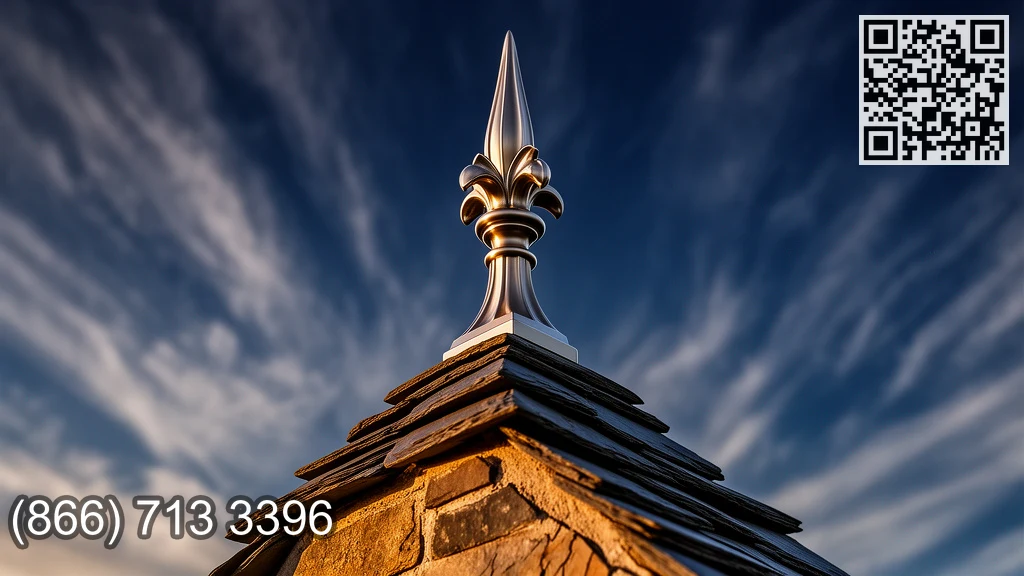
copper finialMaterial choices and aging management
Copper remains the aristocrat of heritage roof covering. It can match custom-made leader boxes, cupola skirts, and smokeshaft shrouds, it ages truthfully, and it forgives small installation errors with a long service life. For snow guards, copper or bronze spreadings bound mechanically to stainless fasteners stay clear of galvanic frustrations. Where budget plan or weight argues against copper, painted stainless succeeds, particularly if the color is tuned to the slate or tile.
On standing joint roof coverings, light weight aluminum clamps lure with price savings, but stainless commonly holds even more reliably on icy joints and avoids string galling in winter. It likewise endures the mini activities of thermal cycling better when coupled with stainless equipment. If a client wants an ideal match to patinated copper details, a stainless or brass guard with a bronze or copper-toned PVD finish avoids the mismatch that raw aluminum can create.
Patina is not just an appearance, it is a routine. New copper set up alongside a 15-year-old ridge and custom finials will certainly telegram its young people. You can pre-patina to a medium brown, or you can approve the very first season's contrast and allow the 2nd winter knock the glow back. Both are valid. The far better selection relies on the client's tolerance for a few months of visual disparity and the surrounding metalwork. Salvo Metal Works has developed treatments that review as truthful, not repainted, which age into the roof covering instead of resting on top of it.
Coordination with architectural details
Snow guards are hardly ever the star. They should backstop the aspects that are, which makes sychronisation indispensable.
At chimneys, shadows and trigger arrestors frequently rest inside the snow shadow of the stack. A launch can bury these and rack the masonry cap. A band of guards on the upslope shoulder prevents that drama. On a house where the chimney puts on a custom shadow and incorporated cricket, the guards become a very discreet note in the very same key, preferably in the same steel, ended up to the exact same tone.
Custom cupolas invite wanders at their windward bases. On a broad south slope, a little structure can gather incredible amounts of snow around its cheeks. Guards set in a limited V above the upwind face, 2 to 3 rows tall, maintain the flashing and keep the cupola's reduced louvers clear. If the cupola airs vent the attic room, clear airflow matters in winter when condensation risk is highest.
Dormers are their very own self-control. The larger the face, the even more they imitate a boulder in a stream. For an in proportion pair of customized dormers on a front slope, I treat the area in between them as a dish, established two or 3 rows limited above the valley, and discolor the pattern outward to appreciate the frontage. On luxuriant dormers with modillions and copper cheek flashings, a cast guard with a restrained account makes a lot more aesthetic feeling than a chunky contemporary pad.
Custom leader boxes, scuppers, and attractive conductor heads are the fashion jewelry at the eaves. They can be both delicate and expensive. Do not rely on a single row of guards to safeguard them from a full-roof release. Instead, position a dual row 3 and 5 courses up, after that a continuous bar 2 programs over the eave above each conductor. In blizzard conditions, the snowpack will creep despite having guards in position, which last bar takes the creep rather than the leader box.
Custom roofing vents can rest high on the slope, where a release can shear them off easily. A tiny halo of guards upstream, sized to the vent body, generally is sufficient. If the air vent is a crafted copper assembly that matches smokeshaft shadows and finials, offer it a generous buffer and do not be timid concerning a tighter collection. Replacing bespoke copperwork is never low-cost, and the cost of a couple of additional guards fades beside a brand-new vent and patching the roof.
Finally, finials at ridges and hips are among one of the most vulnerable details to ice. They trap a pocket where meltwater can refreeze and put in spying stress. I rarely install guards right at a ridge, however I will bring the leading row greater than typical listed below a finial line on a north incline to hold the pack and minimize creep towards the hip.
Structural anchoring without compromise
On old buildings you inherit what the woodworkers left: plank sheathing, variable rafter spacing, occasionally a mix of hand-cut and small lumber. Attaching snow guards as if every little thing were modern-day plywood is an error. On slate, through-fastening is rarely appropriate. The trick is to pick hardware that bears on the slate surface while transferring lots through hooks and bands to underpinning. When a straight connection is inevitable, I will certainly penetrate for rafters and include hidden blocking from the attic room before attempting a through-slate bar system.
Standing seam steel permits a cleaner remedy. A properly crafted clamp holds the seam without infiltrations. The crucial variable is not just secure strength but seam geometry. Vintage double-lock seams differ from contemporary snap-locks. A store like Salvo Metal Works will measure the seam crown, fold geometry, and metal scale, then supply secures with pads that match. Torque values issue. Over-tightening flaws the joint and compromises it, under-tightening allows a bar creep. In the area I note each clamp with a paint dot after the torque wrench clicks, since wintertime solution calls benefit memory.
On clay floor tile, the surface is frequently also breakable for point loads. A continual snow fence sustained by brackets that hook under the ceramic tile and land at rafter locations spreads the tons. This avoids drilling fragile tile, and with careful flashing, disappears from the ground. The brackets themselves need to be stainless or bronze to stay clear of deterioration, particularly near the coastline where salt spray accelerates degradation.
Microclimates and the art of local adjustment
No two elevations are alike. Wind drives snow around edges and combs some faces bare while it loads others. A lakeside home with a west direct exposure will reveal really different behavior from a sheltered townhome with city warm at its flanks. I construct room in every layout for regional modification after the very first wintertime. Clients value listening to that the strategy consists of a tune-up. It turns uncertainty into a promise.
A six-bedroom shingle-style on a bluff instructed me this very early. The north gable held its snow from December to March. The south gable, very same pitch and product, dumped in every thaw. After the first period we increased the density on the south, tightened the pattern over a porte cochere, and added a discreet warmed trough over the back door. The roof quit surprising people, and the proprietor quit calling his insurance coverage agent.
Detailing for longevity and service
Heritage work requests for perseverance and craft. Bed linens slate-mounted guards in a suitable sealant, splashing copper with proper firm joints where a strap passes through a trough, and isolating dissimilar steels with nylon washing machines all feel picky in a shop. On a roof covering in January they seem like grace. Fastener selection matters. 300 series stainless with torx heads withstands stripping in the cool, and when a guard needs substitute down the line, you will thank yourself. Where guards tie to framing, I pre-drill and use architectural screws sized for withdrawal resistance, not generic deck screws that snap without warning.
Service belongs to the formula. If a personalized snow fencing runs over a third-story eave, strategy gain access to factors. On a slate roof, that might mean momentary anchors quietly hidden under ridge caps, prepared for a certified rope tech when it is time to inspect. On a standing seam, plan secure positions to enable a future staging brace without disrupting the guard pattern. A little planning keeps a future tradesperson from making a determined hole where you do not want one.
When to make use of heat and when to hold your fire
Heat cable televisions have their location, however they are not a replacement for a thoughtful guard format. On complex roofs with chronic ice dam problems, a heated trough behind the lowest guard row keeps meltwater moving in a regulated channel, particularly over susceptible fascia information and custom-made leader boxes. In deep snow nation, a warm trace along a valley under an open metal valley flashing maintains the convergence from welding right into a strong block.
What I stay clear of is running cable televisions across a heritage slate face. It looks incorrect, it welcomes abrasion, and it has a tendency to stop working where it is hardest to deal with. If you should warm, hide it in copper, and set it with guards that do the mass of the job. The power ought to manage discharge water, not keep back a ton of snow.
Working with a fabricator that knows roofs
There is a distinction in between metal formed to an illustration and items made by individuals that have stood on frozen slate at sunset while a squall relocates. Shops like Salvo Metal Works have that muscle mass memory. They can produce Custom-made Snow Guards that match a finial profile, scale a custom-made chimney shroud to stay clear of wind shout, or form a low-profile guard for a fragile eyebrow dormer. When you send them an illustration and images, include pitch, rafter spacing, joint geometry, and the tale of your home. The appropriate maker will certainly ask much better concerns than you believed to answer.
Coordination issues beyond the guards. If the cupola requires a new skirt, order it in the exact same run as the guards. If the leader boxes are obtaining upgraded, match the steel and surface. It is satisfying to walk back to a task 5 winters months later on and see a roof covering that has actually worked out right into one voice. The aging is even, the guards are silent, and the details still smile.
A note on budgets and priorities
Not every task has the funds to do everything the most effective feasible method. When the spending plan tightens, prioritize human safety and focused dangers to the structure. That usually indicates dense protection above entrances and walkways, reinforcement at valleys, and careful protecting around personalized roofing vents and dormers. Visual balance on a back incline can wait. The eaves over a cooking area door cannot.
You can likewise phase work. Start with the most awful faces, monitor exactly how the roofing system acts for a season, then return with targeted adjustments. It is amazing exactly how commonly a careful very first pass addresses 80 percent of the trouble. The last 20 percent takes longer and sets you back more per foot, however it can be planned around actual information as opposed to a spreadsheet.
Telling when a design succeeds
You will recognize by springtime. The seamless gutters remain directly. The customized leader boxes reveal water lines, not damages. The copper finials sit plumb. The snow thaws in place or insinuates mild scallops with the guard grid. The proprietors stop texting you video clips of gliding cornices. Best of all, the guards vanish right into the architecture. Visitors observe the slate, the rhythm of the dormers, the shimmer of a cupola at sunset, not a field of glossy hardware.
The gift of a well-considered snow guard plan is peaceful confidence. It prolongs the life of a heritage roof covering, secures the crafted parts that make a residence sing, and transforms wintertime from an enemy into a period the structure can populate with grace.
A useful field checklist
- Map threats: access, walks, drives, terraces, and below-dormer zones that see human web traffic or important information like custom-made leader boxes. Read the roof: pitch, orientation, surface area material, valley geometry, and locations of smokeshafts, personalized roofing vents, and dormers. Probe framework: rafter design, sheathing type, seam geometry, and any kind of weak spans that suggest for bars over pads. Match the steel: coordinate surface and alloy with existing copperwork, custom-made finials, cupola elements, and smokeshaft shrouds. Plan service: safe accessibility for future assessment, exchangeable equipment, and allocations for small tune-ups after the initial winter.
A last tale from the field
A Georgian Resurgence outside Boston brought a happy main block with 2 flanking ells, all in finished slate. The roofing had actually been replaced twenty years previously with excellent handiwork and little thought to snow. The customer had purchased beautiful copperwork: custom-made cupolas over the ells, scrolled conductor heads, and a carefully made smokeshaft shadow that set the whole composition off. Two wintertimes in a row, a south incline slide tore the south ell's seamless gutter and crushed the conductor. The proprietor wanted a repair that did not advertise itself.
We strolled the roofing system in late fall. The south face saw high sunlight and a little interior heat loss near the ridge. The primary block channelled drift towards the ell's headwall. Instead of a solitary hefty bar at the eave, we laid a staggered triple row beginning five courses up, then a continual low-profile fence 2 training courses above the eave just over the ell and the conductor head, linked into rafters we reached by adding concealed blocking from the unfinished attic room. We built triangular collections at the valley shoulders, matched the copper to the existing aging with a hand-applied therapy, and tightened the pattern by the solution entry where shipments happened.
That winter months, the south face still thawed faster than the north, however the snow broke in smaller sized scallops, hung on the grid, and reduced toward the eave as water. The conductor head kept its pleased scrolls. The cupola used a rime of frost at its base, absolutely nothing even more. From the road, the roof looked as if it had actually always been this way. The guards did their work, pleasantly and without sound. That is the typical to go for on every heritage roof covering, whether the information originate from a housewright a century earlier or from a fabricator today forming copper right into kinds that will still be working, quietly, when an additional staff goes up in some far-off winter.
Salvo Metal Works
Office - (630) 857-3631
Toll Free- (866) 713-3396
[email protected]
566 W 5th Ave, Naperville, IL 60563
 Ask ChatGPT
 Ask Grok
 Ask Perplexity
 Ask Claude
 Ask Google AI
 Ask You